What Affects Plaster Consumption in Phuket and How to Calculate It
When planning a renovation in Phuket, it's crucial to accurately calculate how much plaster you'll need. Our tropical climate introduces its own variables. High humidity, salt air, and intense sun affect both the choice of mix and its consumption. Manufacturers indicate the norm for a 1 cm layer, but the actual quantity depends on the condition of your walls.
Main Factors Affecting Consumption in Thailand's Conditions:
-
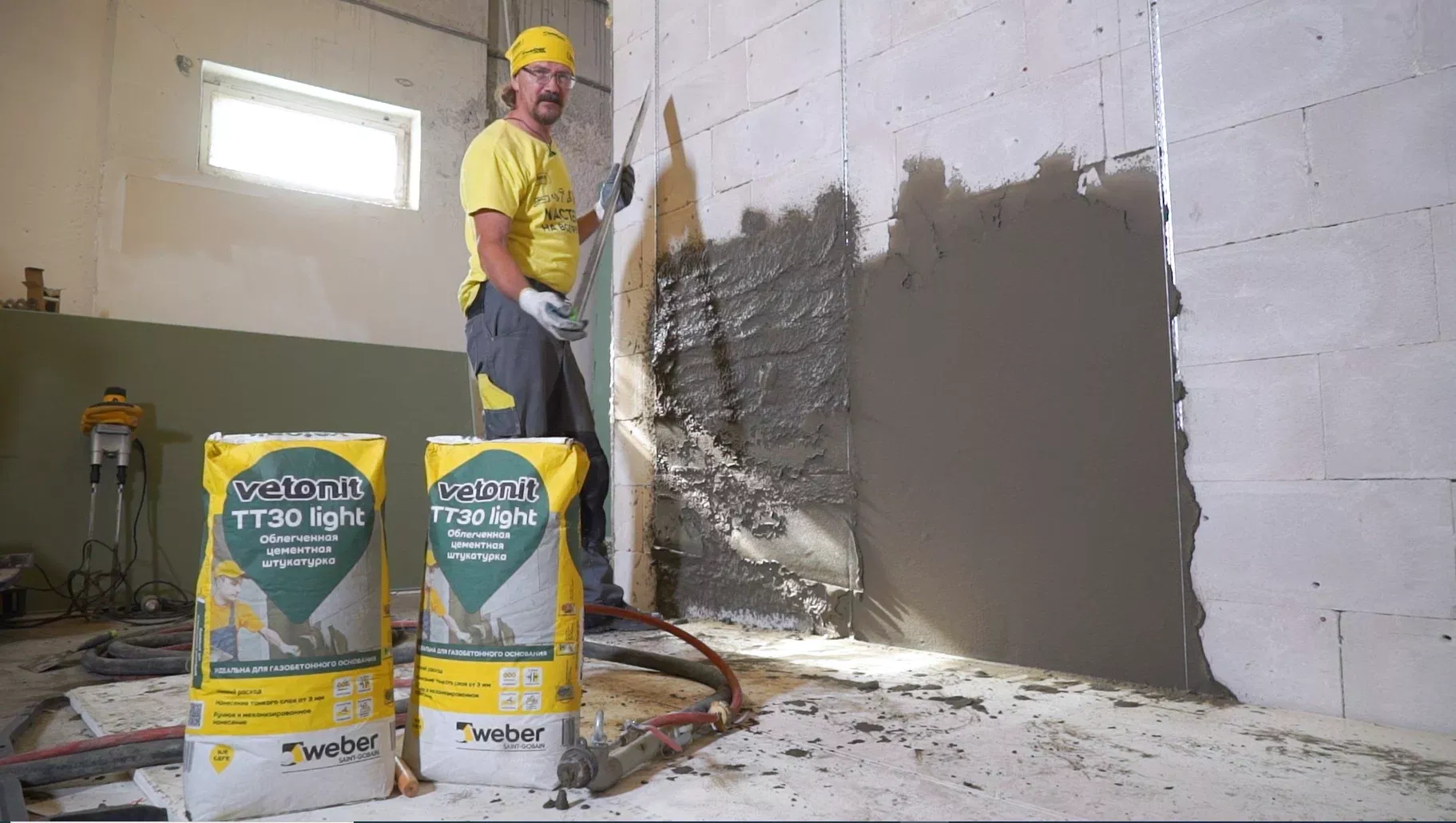
Wall Unevenness. This is the key factor. Irregularities, cracks, and deviations, often worsened by moisture, must be leveled. To accurately determine the required layer thickness, professionals use setting up beacons. The average thickness is calculated by measuring deviations at several points. For example: (2 cm + 4 cm + 3 cm) / 3 = 3 cm average layer.
-
Type of Plaster Mix. The density and composition of the mix directly affect the weight needed to cover a square meter. For Phuket's humid climate, hydrophobic additives and resistance to mold are especially important.
-
Substrate Absorbency. Walls made of porous aerated concrete or shell rock without prior deep-penetration primer strongly absorb water from the mortar, increasing consumption by 15-20%.
-
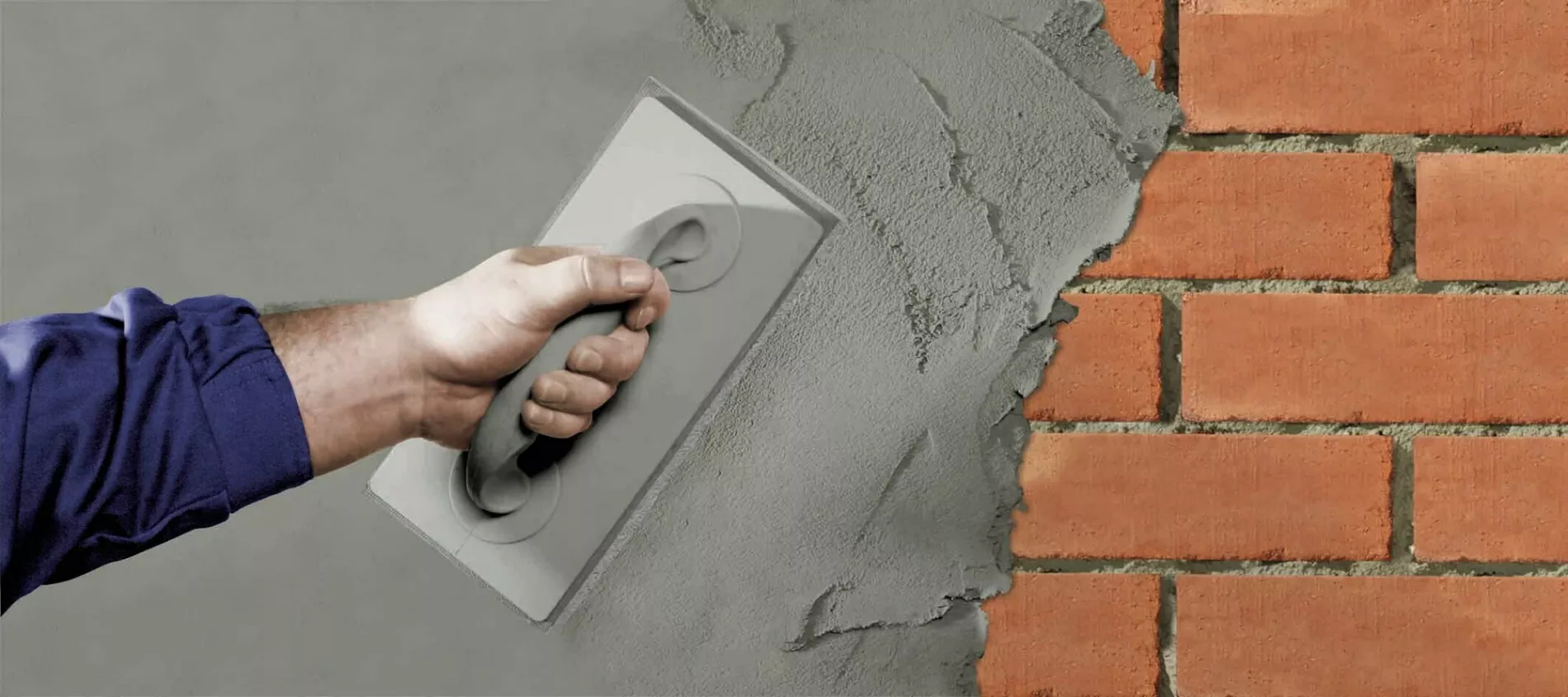
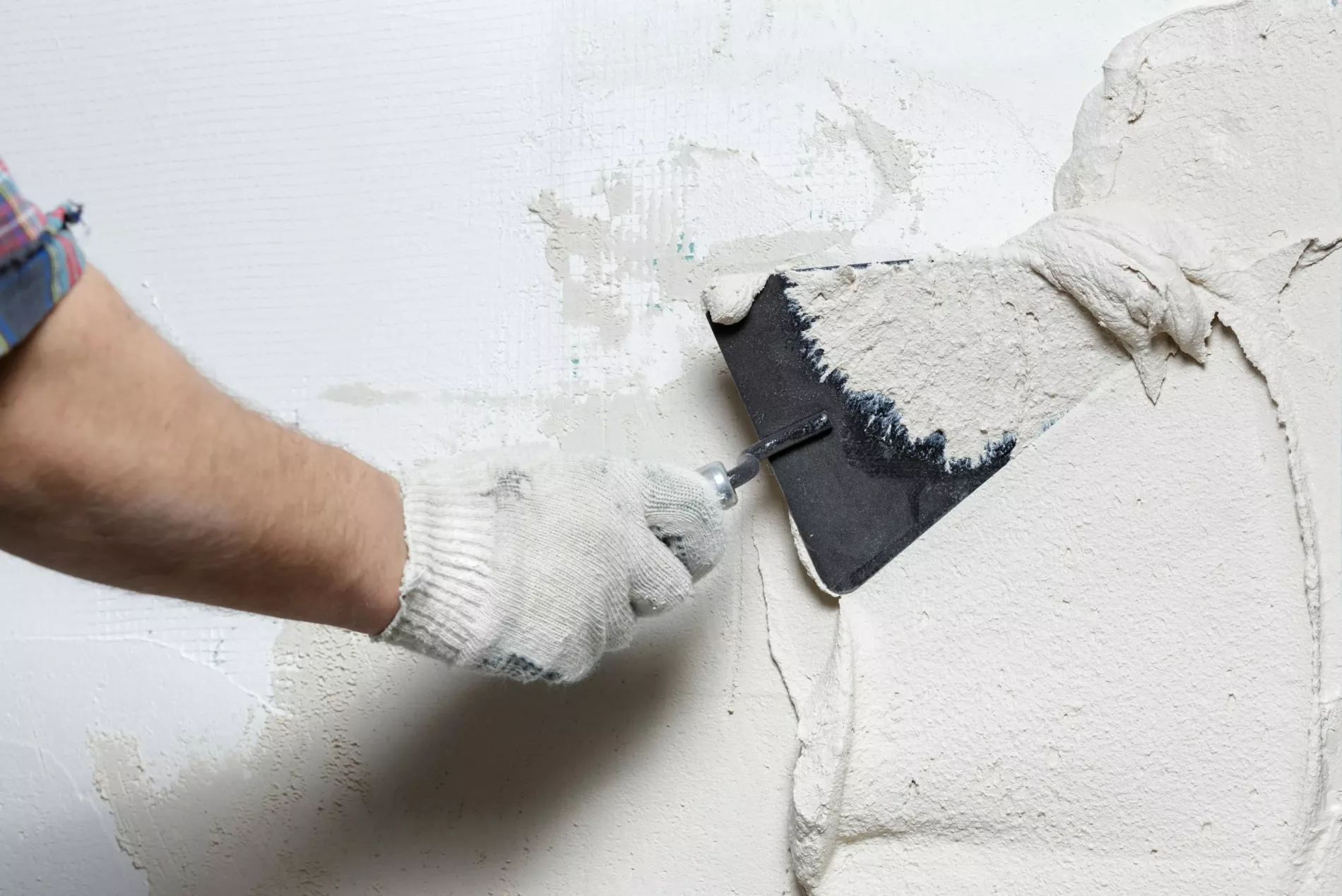
Application Technique. Losses during mixing, adhesion to tools, and the need for fast work in the heat also affect the final quantity.
Simple Formula for Self-Calculation:
Wall Area (m²) × Average Layer Thickness (cm) × Consumption Rate from Packaging (kg/m²/cm) + 10% Margin = Required Quantity (kg).
Example for a Villa in Karon: Wall 20 m², deviation 2.5 cm, SCG mix (rate 13 kg/m²/cm).
Calculation: 20 × 2.5 × 13 = 650 kg. With a 10% margin: 650 × 1.1 = 715 kg (about 24 bags of 30 kg).
Types of Mixes and Their Consumption: Choosing Right for Phuket
Choosing plaster for Phuket is not just an aesthetic issue but also about protecting your home from the tropical climate. Below is an overview of popular mix types with an emphasis on their application and consumption.
Gypsum Plaster (e.g., Knauf Rotband)
-
Average Consumption: 8.5 – 9.5 kg/m² at a 10 mm layer.
-
Ideal for: Interior walls and ceilings in dry rooms, condominiums in Patong.
-
Pros for Phuket: Creates a smooth base for painting, dries quickly.
-
Cons for Phuket: Fears constant moisture, not suitable for facades and bathrooms without special protection.
Cement Plaster (e.g., SCG SmartWall, Cement-Plaster)
-
Average Consumption: 12 – 17 kg/m² at a 10 mm layer.
-
Ideal for: Facades, plinths, wet areas, seaside houses (Nai Harn, Rawai).
-
Pros for Phuket: High strength, excellent moisture resistance, resistance to salt corrosion.
-
Cons for Phuket: Heavy weight, requires more professional application, less vapor-permeable.
Acrylic (Polymer) Plaster/Render (e.g., TOA, Jotun)
-
Average Consumption: 1.5 – 4.0 kg/m² at a 10 mm layer (often applied thinner).
-
Ideal for: Decorative finish and topcoat for facades, creating textures.
-
Pros for Phuket: Elasticity (resistant to microcracks), rich color range, often contains fungicidal additives.
-
Cons for Phuket: High cost, low vapor permeability, requires a perfectly even substrate.
Thermal Insulation Plaster (based on perlite/vermiculite)
-
Average Consumption: 5 – 8 kg/m² at a 10 mm layer.
-
Ideal for: Additional thermal insulation of walls, reducing heat gain in homes with constant air conditioning.
-
Pros for Phuket: Improves home energy efficiency, creates a more comfortable microclimate.
-
Cons for Phuket: Higher price per square meter of finished coating.
How to Reduce Consumption: Tips for Phuket's Climate and Summary
Saving on materials is possible and necessary, but not at the expense of quality, especially in a humid climate.
Top 5 Ways to Optimize Consumption in Phuket:
-
Prime Walls with Two Coats. This is not an expense but an investment. Deep-penetration primer drastically reduces substrate absorbency, improves adhesion, and prevents plaster delamination. In high humidity conditions, this is mandatory.
-
Use Beacons and a Straight Edge. Even for small areas. This guarantees applying the minimum necessary average layer thickness, not thickening the plaster "by eye."
-
Choose the Right Mix for the Task. Don't cover a facade with expensive acrylic paint-render in a thick layer. Level the wall with a more affordable cement mix, and apply the decorative layer thinly.
-
Consider Drywall for Problem Walls. If wall deviations exceed 4-5 cm, it's often more cost-effective and faster to level them with drywall (plasterboard) on a frame than to use tons of plaster.
-
Schedule Work for the Dry Season. Try to perform exterior plastering work from December to March. Less risk that a sudden downpour will wash away fresh mortar, leading to material spoilage and rework.
Summary:
Accurate plaster consumption in Phuket depends on wall unevenness and the correct choice of a mix resistant to moisture and salt. Always use primer and include a 10% margin. For seaside facades, choose cement-based or specialized acrylic compounds; for interior dry rooms — gypsum-based. Competent calculation and preparation are the keys to a durable renovation and protecting your home from the tropical climate.
Struggling with the calculation or choosing a mix for your project?
Send us photos of the walls and the area via our Facebook page or messenger — our specialist will prepare a free estimate for you, considering our store's assortment and Phuket's specifics.