Phuket: A War with Water That Can Be Won
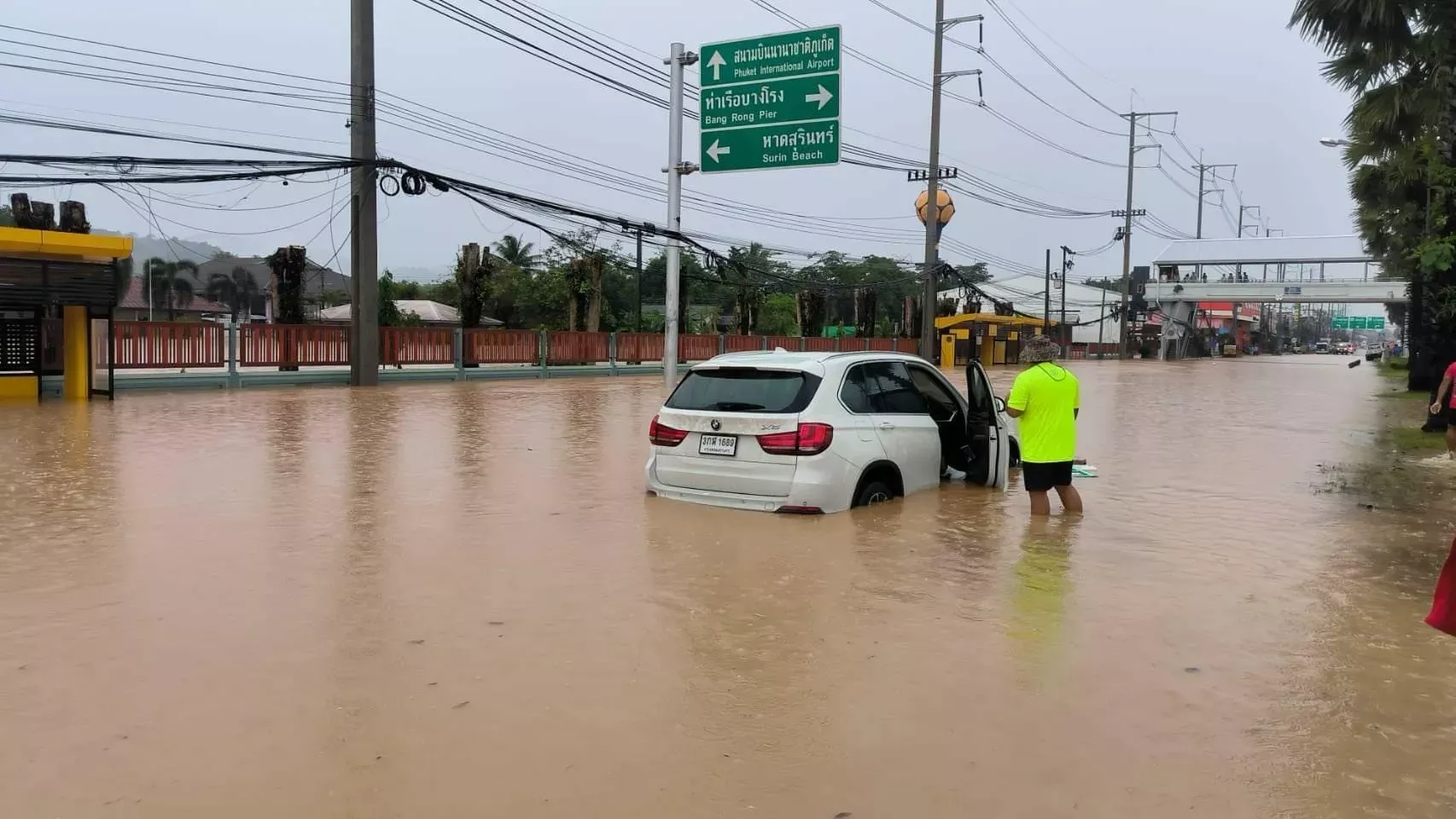
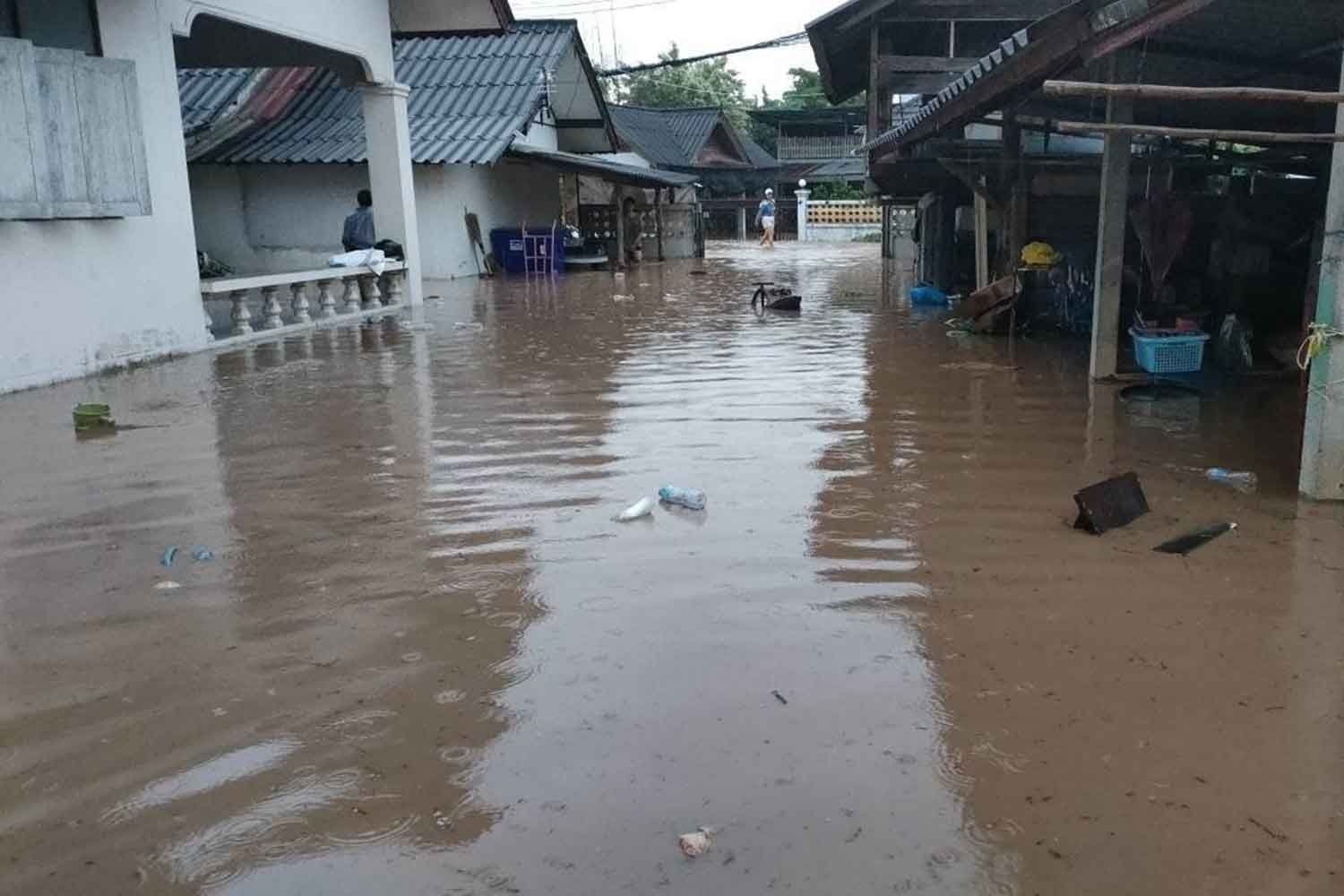
Life on a tropical island is an eternal dialogue with the elements. And the main interlocutor here is water. It brings coolness and beauty, but from September to October it changes its character, becoming a powerful force that annually tests the resilience of every home, every street, and every resident. An annual rainfall of 2200-2500 mm is not an abstract figure, but a physical phenomenon capable of altering the landscape and destroying what seemed unshakable. Residents of the low-lying areas of Kathu know how streets turn into raging rivers after a six-hour downpour, and in Patong, water from overloaded roofs sometimes finds its way into apartments through the smallest cracks in the finish.
This reality shapes a unique approach to construction, where every element—from the width of a gutter to the grade of concrete—is viewed through the lens of moisture resistance. A successful house here is not one that simply stands on a plot, but one that has its own "water cycle" system: it receives rain on a sturdy roof, directs flows through designed channels, blocks groundwater, and allows excess vapor to escape without destroying the structure.
The Nature of the Adversary: Why a Phuket Downpour is an Engineering Challenge
To build and renovate wisely, one must understand not only the quantity but also the specificity of local precipitation. Phuket's climate is a combination of extremes creating unique challenges.
Statistics That Matter:
-
Volume: Average annual rainfall of 2200-2500 mm. For comparison, Moscow gets about 700 mm.
-
Intensity: Peak months are September and October. Over 100 mm of water can fall in a single day. This is equivalent to a full standard bathtub poured onto every square meter of roof in 24 hours.
-
Event Density: Short but incredibly intense "tropical showers" can deliver a month's norm in a few hours, creating instant stress on drainage systems.
The Compound Effect: Water as a System of Threats.
The key feature is that the threat comes not only from above. It is a multi-level attack:
-
Direct Impact (Downpour): Powerful load on the roof, facade, and flooding of the area.
-
The Invisible Sapper (Humidity): A constant humidity level of 80-95% prevents structures from drying out, creating a perfect environment for mold inside walls.
-
The Chemical Agent (Salt Air): Sea breezes carry salt, which accelerates the corrosion of metal structures, fasteners, and reinforcement.
-
The Weakening Agent (UV Radiation): In the dry season, the sun degrades polymers, fades paints, and creates microcracks—future pathways for water intrusion.
Case Studies as Evidence:
Real-life cases show the cost of mistakes. After heavy rains in 2017 and 2022, low-lying parts of Chalong and Kathu remained flooded for 2-3 days, leading to ground-floor flooding in homes with poor drainage. In modern Patong, a common hidden problem is "wet walls" in new buildings—a consequence of incorrect dew point calculations and the use of vapor-impermeable finishing materials. Water that gets into the wall cannot escape and condenses inside, destroying insulation and promoting fungal growth.
Thus, the key takeaway for any builder or owner is this: in Phuket, you are dealing not with a weather nuisance, but with a constant engineering factor. Design and material selection must begin with the question: "How will this structure or material behave after three years of this climatic cycle?"
Defense Strategy: Multi-Layered Protection as the Standard
Winning this "war" is only possible with a system where each layer solves its own task, creating a layered defense.
1. The Roof: Not Just a Cover, But the First Line of Defense.
The task is to prevent water from entering and evacuate it as quickly as possible.
-
Technologies: For pitched roofs, an underlayment waterproofing barrier—a membrane that insures the main roofing—is mandatory. For flat, usable roofs—only polymer PVC or TPO membranes, welded into a single sheet, or high-quality liquid-applied waterproofing.
-
Infrastructure: Drainage systems are calculated with a double safety margin. A practical solution is oversized gutters (125-150 mm in diameter) and their regular cleaning before the rainy season.
2. The Facade: A "Breathable" Barrier.
The wall must be a shield against driving rain, but not a sauna for internal condensation.
-
The Ideal Scheme: A Ventilated Facade. Cladding (panels, planks, porcelain tiles) is mounted on a frame with a 20-40 mm gap from the main wall. This creates constant air flow that removes any moisture.
-
Materials: Plasters and paints are chosen with a high vapor permeability coefficient (silicate, silicone, lime-based). They repel water from the outside but release vapor from the inside.
3. The Foundation and Perimeter: The Battle for the "Zero Cycle."
The strategy here is active diversion.
-
Perimeter Drainage is Mandatory. A perforated pipe in a sleeve of geotextile and gravel is laid around the foundation below its base.
-
A "Dry Law" for the Plot: Ground slope away from the building of at least 5% (5 cm per 1 meter), plus a concrete or paved apron at least 1 meter wide. Water simply has no chance to linger at the base.
4. Details That Become Fatal.
-
Metal: Only stainless steel AISI 304/316 or hot-dip galvanizing. Ordinary black steel in concealed structures is a ticking time bomb.
-
Outdoor Wood: Thermally modified wood or durable species (teak, ipe, cumaru). All other options require aggressive chemical treatment and frequent coating renewal.
Practice: From Inspection to Implementation
Strategic knowledge is embodied in concrete actions and choices.
Annual Preparation Checklist (April-May):
-
Roof: Visual inspection of the covering, checking fasteners, clearing gutters and downspouts.
-
Facade: Checking the sealant in joints and seams, renewing protective wood treatments, checking drainage holes in ventilated facades.
-
Grounds: Clearing storm ditches and drain grates, checking pump operation in drainage sumps (if any), trimming overhanging vegetation.
What to Do If a Problem Already Exists (Symptoms & Solutions):
-
"Wet Spot" on the Ceiling: Locate the exact leak point on the roof (often not directly above the spot), dry out the floor structure, restore the integrity of the roofing system.
-
Mold in a Room Corner: This is a "thermal bridge" and insufficient ventilation. Need to find the point of condensation/cold bridging in the wall, eliminate it (additional external insulation), and arrange forced extraction in the area.
-
Damp Smell in a Wardrobe: The problem is lack of air exchange. The solution is installing supply or supply-exhaust ventilation, possibly with a heat recovery unit.
Conclusion: A Philosophy of Durability.
Building in Phuket is not a race for square meters. It is the creation of an environment resilient to the complex and beautiful local climate. The most reliable houses here are built on the principle of tropical skepticism: not hoping for the best, but building a safety margin into the design and materials, calculated for the worst-case, not the average, weather scenario.
Investing in proper waterproofing, drainage, and "breathable" materials is not an overpayment. It is an insurance policy, the cost of which equals the price of one major repair after a water breach. Ultimately, this approach provides not just dry walls, but the most important thing—peace of mind. The peace of mind with which you can watch a tropical downpour pour from the sky, knowing that your house passed this test at the blueprint stage.