


Suspended Ceilings buy in Phuket: best prices online, delivery throughout Thailand

Suspended Ceilings

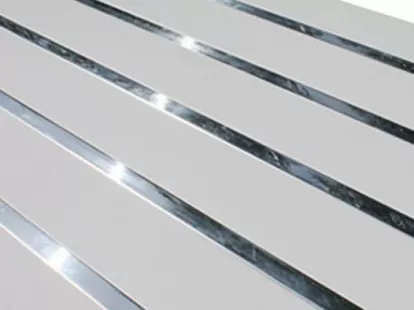
Rack-and-pinion ceiling - 1.7x1.7 m (ID:79426)
Rack-and-pinion ceiling - 1.7x1.7 m
Specifications Brand: Albes Product Type: Rack-and-pinion ceiling Material: Aluminum Application: Bathroom, Toilet Type of rail:...
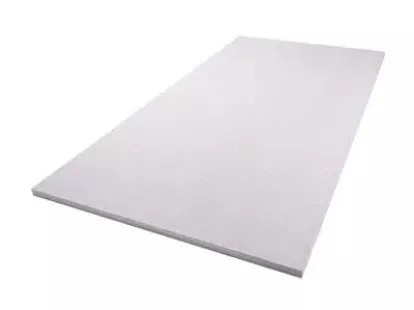
Plate for the suspended ceiling 1200x600x20 mm for 7 575฿ (ID:79425)
Plate for the suspended ceiling 1200x600x20 mm
Specifications Brand: Rockfon Product Type: Acoustic Cooker Material: Stone wool Country of Origin: China Application: Public spaces...
Price for pcs 7 575 ฿

Frequently Asked Questions

What are the pros and cons of demountable suspended ceilings compared to drywall in terms of operation and maintenance?

The main difference between demountable systems (cassette, tile, Grillato) and gypsum board (drywall) ceilings is the accessibility of the plenum space above them.

  • Demountable Suspended Ceilings:

    • Pros: Easy access to utilities for repair and upgrades. Panels (especially cassettes) can be removed for cleaning or replacement. Some models (Grillato, perforated) improve ventilation. Metal cassettes can be washed.

    • Cons: A less monolithic and sometimes less decorative appearance. The plenum space reduces the room's clear height.

  • Drywall Ceilings:

    • Pros: Seamlessness, the possibility of complex designs, curved forms, and hidden lighting. Better sound insulation when installed correctly.

    • Cons: Completely non-demountable. Access to utilities requires cutting the finish with subsequent repair. Requires finishing work (joint taping, plastering, painting).
      Conclusion: For technical, commercial, and frequently modified spaces, choose demountable systems. For residential interiors focusing on unique design, choose drywall constructions.

What is the structure of a suspended ceiling and what types of fasteners (hangers) are used during installation?

The structure of any suspended ceiling consists of two main elements: a load-bearing frame (made of metal profiles) and decorative panels. The frame is attached to the base slab using hangers, which compensate for unevenness and allow for level adjustment.
Main types of hangers:

  1. "Butterfly" Clip Hanger (e.g., Armstrong). The most popular for lightweight tile and cassette ceilings. Inexpensive, reliable, allows for quick height adjustment by snapping into place.

  2. Threaded Rod Hanger (stud with adjustable nut). Used for heavy constructions (drywall ceilings, some linear systems). Notable for high reliability and precise adjustment, but more expensive and complex to install.

  3. Rigid Hanger (angle bracket or straight strap). A simple and cheap fastener but does not allow for level adjustment and may transmit vibrations.
    The installation process is standard: marking the level, installing wall molding (edge trim), mounting hangers to the slab, assembling and leveling the frame, laying or fixing the panels.

What are the main types of suspended ceilings and how to choose the right one for an office, store, or apartment?

The choice of a suspended ceiling depends on the room's purpose. All systems are mounted on a frame using hangers but differ in panel type.

  • For offices and public buildings, cassette ceilings (metal or mineral fiber) are ideal. They are demountable, providing easy access to utilities (wiring, ventilation), and offer good sound insulation. "Grillato" ceilings are popular – grid-like aluminum constructions for shopping centers, ensuring ventilation and a modern look.

  • For stores, linear (or strip) ceilings (metal planks) or glossy cassette panels are often chosen to create a bright space.

  • For apartments, gypsum board (drywall/plasterboard) ceilings are common. This is a non-demountable system allowing for complex multi-level designs, but access to the plenum space is blocked. For kitchens and bathrooms, moisture-resistant PVC panels are suitable.
    Bottom line: The key criterion is the need for access to utility lines (demountable cassette systems) versus design focus (non-demountable drywall, decorative linear systems).

What are suspended ceiling systems and what is their main advantage?

Suspended ceiling systems are a modern construction consisting of a metal frame, secured to the base ceiling with adjustable hangers, and decorative panels (tiles, planks, cassettes). The main advantage is the creation of a perfectly level surface that conceals all defects of the original ceiling and provides space to hide any and all utility lines: electrical wiring, ventilation ducts, air conditioning systems, fire alarms, and CCTV cabling. This is especially relevant in Thailand and Phuket, where utilities are often surface-mounted, and air conditioning installation is a must. Installation is handled by both local construction crews and specialized firms, often using materials of Asian manufacture (from Thailand, China, Malaysia), which are better adapted to the humid tropical climate.