
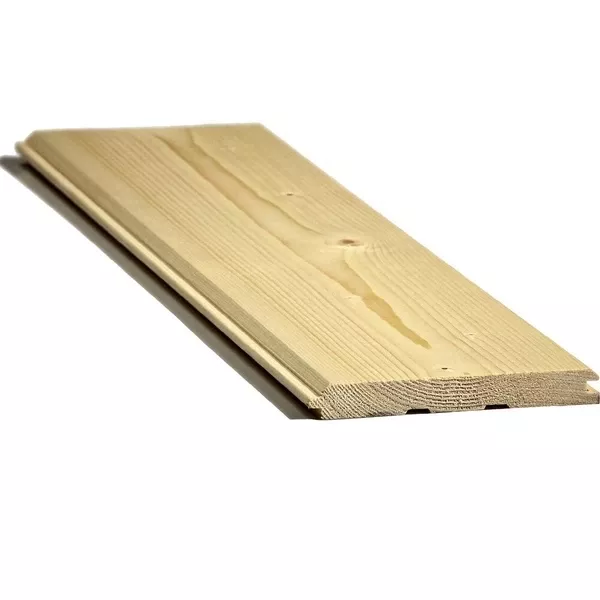
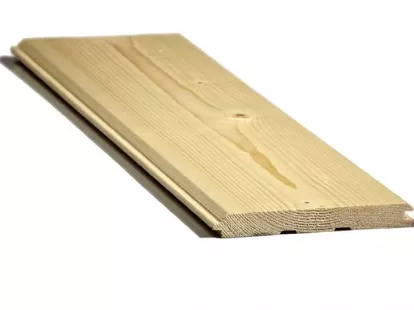
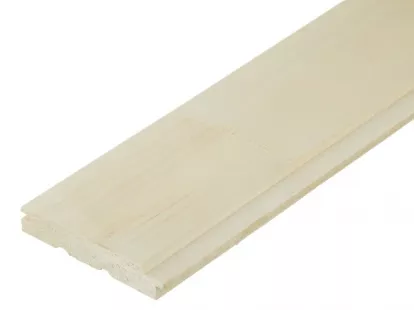
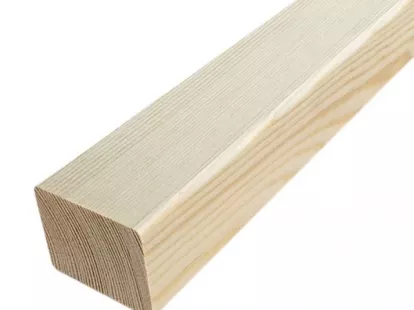
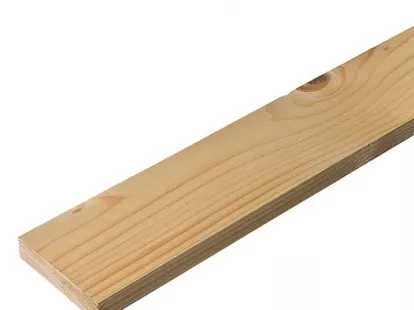
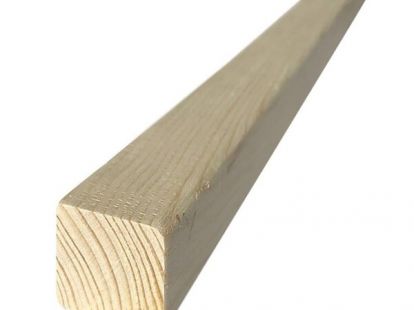
Grade C (Economy) cladding is a practical and affordable material for quick and efficient surface covering. The products feature a planed "Shtil" profile surface (with tongue-and-groove jointing), but, in accordance with the grade requirements, characteristic tolerances may be present on the face side.
Features of Grade C:
-
Surface roughness and areas of incomplete planing.
-
Minor machine marks, chips, and tear-outs are allowed.
-
Presence of sound intergrown knots, dark knots, or loose knots.
-
Possible knot holes, cracks (including end checks), resin pockets (pitch pockets), wood discoloration (blue stain), pin knots, and bark pockets.
Ideal For
-
Rough and budget-friendly cladding of non-residential spaces (sheds, garages, workshops, utility buildings).
-
Creating temporary partitions or structures.
-
Covering surfaces that will later be painted with opaque finishes.
-
Exterior cladding of technical outbuildings.
Advantages
-
Cost-Effectiveness: The most affordable cladding option.
-
Functionality: Full "Shtil" profile for reliable installation.
-
Eco-Friendliness: Natural wood material.
-
Packaging Convenience: Sold in packs of a specified area for easy calculation.
Recommendation: It is recommended to treat the material with protective compounds (antiseptic, fire retardant) before use. For living interiors or critical finishing, consider cladding of higher grades ("A", "B", or "Extra").